
When someone you care about is under the weather, the right words can make a world of difference. A thoughtful “get well soon” reply is more than just a polite gesture — it is a small but powerful act of kindness that reminds the person they are not alone in their recovery. Whether you are responding to a text, a card, or a heartfelt message, knowing exactly what to say can lift spirits and speed up healing in ways medicine simply cannot.
Crafting the perfect get well soon reply does not have to be complicated. From warm and personal notes to light-hearted messages that bring a smile, there is a style to match every relationship and situation. This guide covers everything you need — the right tone, the best phrases, and the most thoughtful approaches — so you can send a reply that truly resonates and shows the person just how much you care.
Why Your Response to “Get Well Soon” Matters
A reply to a get-well message isn’t just good manners — it closes the loop and lets the sender know their care landed. Skipping a response can leave people wondering if you’re okay or if the message even reached you. A short, genuine reply costs little effort but builds real goodwill.
The right tone of reply also signals how you’re actually doing. A cheerful, joke-filled response tells people you’re recovering well, while a softer, grateful note signals you still need support. Matching tone to your real state helps people respond appropriately going forward.
Finally, these replies strengthen relationships. Family, friends, coworkers, and even acquaintances remember who acknowledges their kindness. A thoughtful reply turns a one-off well-wish into a small moment of genuine connection.
- Confirms you received and appreciated the message
- Reassures senders you’re okay or recovering
- Prevents awkward silence or unanswered texts
- Strengthens personal and professional relationships
- Shows respect for the sender’s time and effort
- Sets the tone for future check-ins
- Helps you process and articulate how you’re feeling
- Encourages continued support if you need it
- Reflects your personality even in illness
- Costs little time but leaves a lasting impression
How to Craft the Perfect Reply: General Tips
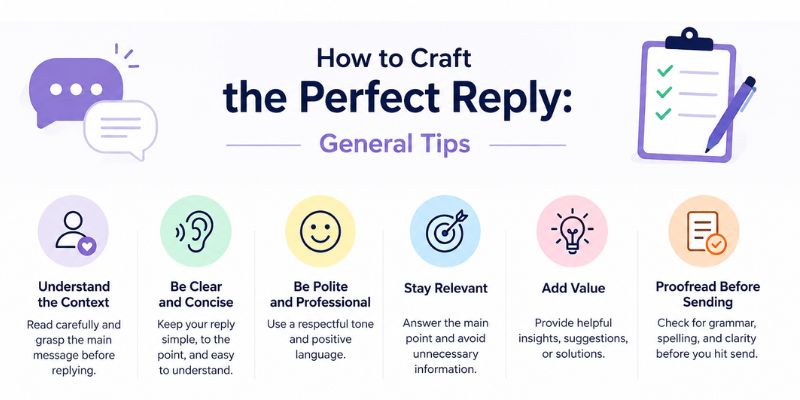
Great replies are short, sincere, and specific. Mentioning what the sender did — a card, a call, a visit — makes the message feel personal rather than copy-pasted. Specificity is what separates a memorable reply from a generic one.
Tone should match your relationship and your actual mood. A reply to your boss won’t read the same as one to your best friend, and that’s exactly how it should be. Reading the room avoids replies that feel either too stiff or too casual.
Don’t overthink length. A single warm sentence is often more effective than a long paragraph, especially when you’re still low on energy. Save longer replies for people you want to update in more detail.
- Keep it brief — one to three sentences is plenty
- Personalize with the sender’s name when possible
- Match the tone to the relationship and situation
- Be honest about how you’re really feeling
- Thank them specifically for what they did
- Avoid forced positivity if you’re not up for it
- Add humor only if it fits your personality
- Update on recovery progress if relevant
- Use simple, warm language over formal phrasing
- End with a light, optional invitation to stay in touch
Replies by Who You’re Talking To

Different relationships call for different registers — what feels warm from a parent can feel awkward from a coworker, and vice versa. This section breaks replies down by who’s actually sending the message. Use it to quickly match tone to audience without overthinking each one.
Family and close friends usually welcome more vulnerability and humor, since the relationship can absorb it. Professional contacts need replies that stay appreciative but contained. Acquaintances and neighbors sit somewhere in between — warm, but not overly personal.
Below, each group gets its own short replies so you can copy, tweak, and send in seconds.
- Family deserves warmth and honesty over politeness
- Friends can handle humor and casual phrasing
- Colleagues need brevity and professionalism
- Teachers and neighbors appreciate simple, respectful warmth
- Match formality to how well you know them
- Closer relationships can include more personal detail
- Workplace replies should avoid oversharing symptoms
- Acquaintances appreciate brevity over depth
- Kids or students may need simpler language
- When unsure, default to short and sincere
Family & Close Loved Ones

Replies to family can be the most emotionally honest, since these are the people who already know your full situation. There’s no need to perform positivity — gratitude and vulnerability both land well here. These messages often double as quick health updates.
Parents, siblings, and partners often want reassurance more than wit. A simple “I’m okay” carries real weight coming from someone they worry about. Keep these replies warm even if brief.
Humor still has a place if that’s how your family communicates, but sincerity should come first.
- “Thank you, I really needed to hear that from you.”
- “I’m okay, just resting and grateful you checked in.”
- “Love you for thinking of me, feeling a bit better today.”
- “Your call honestly made my whole day better.”
- “I’m taking it easy, but your support means everything.”
- “Still under the weather, but your message helped a lot.”
- “I knew you’d be the first to check on me.”
- “Feeling cared for already, thank you for this.”
- “I’ll be okay, especially with family like you around.”
- “Resting up — can’t wait to see you when I’m better.”
Friends
Replies to friends can lean playful, sarcastic, or self-deprecating depending on your usual dynamic. This is where personality shows the most, since friendships rarely require formality. A funny reply often reassures friends more than a serious one.
That said, close friends also appreciate honesty if you’re genuinely struggling. The key is matching whatever banter style you already share.
Short, casual replies work best — friends rarely expect a long message.
- “Aw, you’re the best, feeling better already.”
- “Still surviving, thanks to messages like this.”
- “Send snacks and I’ll recover twice as fast.”
- “You checking on me is basically my medicine now.”
- “Down bad but your text helped, ngl.”
- “I owe you a coffee for that kindness.”
- “Feeling rough but this made me smile.”
- “Thanks for not forgetting about me, sicko status confirmed.”
- “On the mend, mostly thanks to good friends like you.”
- “Appreciate you — back to bothering you again soon.”
Workplace & Colleagues
Workplace replies should be warm but contained — appreciative without turning into a long personal update. Coworkers and managers usually just want reassurance you’re handling things and will be back when ready. Keep medical details minimal unless you’re comfortable sharing.
A short, polite reply also signals professionalism even while you’re unwell. It shows you’re still engaged without overextending yourself.
If colleagues covered work for you, a quick thank-you goes a long way.
- “Thank you for the kind message, I’m recovering well.”
- “Appreciate you checking in — should be back soon.”
- “Thanks, team! Resting up and feeling better already.”
- “Grateful for the support, will update on my return date.”
- “Thanks for covering for me, I owe you one.”
- “Feeling better, thank you for your patience this week.”
- “Your message brightened a slow recovery day, thank you.”
- “I’m on the mend — appreciate you thinking of me.”
- “Thanks for the well wishes, hope to be back soon.”
- “Kind of you to reach out, recovery is going smoothly.”
Teachers, Neighbors & Acquaintances
Replies to teachers, neighbors, or acquaintances should stay light and brief, since the relationship is friendly but not deeply personal. A short thank-you is usually all that’s expected here. Over-explaining your condition can feel unnecessary in this context.
These replies still matter, though — they maintain goodwill in everyday community relationships. A warm, simple message keeps the connection pleasant without overstepping.
Keep things polite and avoid assuming too much familiarity unless the relationship calls for it.
- “Thank you so much, that was very kind of you.”
- “I appreciate you thinking of me, feeling better already.”
- “Thanks for checking in, recovery is going well.”
- “That was thoughtful of you, thank you.”
- “I’m doing better, thanks for asking.”
- “Kind of you to reach out, much appreciated.”
- “Thank you, hope to be back to normal soon.”
- “Really sweet of you, feeling stronger each day.”
- “Appreciate the well wishes, doing okay now.”
- “Thanks again, it means a lot coming from you.”
Replies by Tone — Find Your Vibe
Beyond relationships, tone is the other major lever for a good reply. Some people want short and simple, others want something funny, flirty, or even sarcastic. This section organizes replies purely by vibe so you can pick based on mood rather than audience.
Mixing tone categories with relationship categories above gives you the most natural-sounding reply. A funny reply to a close friend, for example, often lands better than a “polite” one ever could.
Browse the tones below and pick whichever fits how you’re actually feeling today.
- Tone should reflect your real mood, not just politeness
- Short replies work universally across relationships
- Humor signals you’re recovering and in good spirits
- Sarcasm works best with people who already get your humor
- Flirty replies are best reserved for partners or crushes
- Polite tone is the safest default with uncertain audiences
- Creative replies help you stand out in group chats
- Cute replies suit close, affectionate relationships
- Bold or fearless replies show confidence despite illness
- Always re-read your tone before sending to mixed groups
Short & Sweet Replies
Sometimes the best reply is the simplest one — a quick line that says thank you without overexplaining. These work well when you’re low on energy or replying to many people at once. Brevity itself can communicate sincerity.
Short replies are also ideal for texts or social media comments, where long messages feel out of place. They get the job done without demanding much from you.
Use these when you want to acknowledge kindness without writing an essay.
- “Thank you, feeling better already.”
- “Means a lot, thank you.”
- “Appreciate this so much.”
- “Thanks, on the mend now.”
- “You’re so kind, thank you.”
- “Feeling cared for, thanks.”
- “Thank you, truly.”
- “Much appreciated, recovering well.”
- “Thanks for thinking of me.”
- “Grateful for this message.”
Heartfelt & Grateful Replies
These replies lean into genuine emotion, ideal for people who went out of their way to show support. They work especially well for close relationships or particularly tough recovery periods. Sincerity is the main ingredient here.
Heartfelt replies often mention how the message specifically made you feel, not just that you received it. This small detail makes gratitude feel real rather than scripted.
Use these when you want the sender to know their kindness truly mattered.
- “Your message genuinely brightened a hard day, thank you.”
- “I felt so cared for reading this, thank you.”
- “This kindness means more than you know right now.”
- “I’m tearing up a little, thank you for this.”
- “You always know how to make me feel supported.”
- “Grateful doesn’t even cover how I feel reading this.”
- “Thank you for never forgetting about me.”
- “This reminded me how lucky I am to know you.”
- “Your support is honestly carrying me through this.”
- “Thank you for caring this much, it shows.”
Funny & Uplifting Replies
Humor is often the fastest way to reassure people you’re okay. A funny reply signals you’re in good spirits and not too unwell to joke around. These work especially well with friends and easygoing coworkers.
Light self-deprecating humor about being sick can also diffuse worry without dismissing it. It tells people you’re taking recovery seriously while staying positive.
Use these when you want to make someone laugh while saying thanks.
- “Pretty sure I’m 10% human, 90% cold medicine right now.”
- “Still alive, somehow, thanks for checking.”
- “Currently auditioning for ‘Most Dramatic Sneeze’ — wish me luck.”
- “Feeling better, mostly thanks to snacks and sympathy.”
- “I’d hug you but germs, so virtual hug instead.”
- “Recovering at the speed of a sloth, but recovering.”
- “Turns out rest actually works, who knew.”
- “Thanks, I needed that laugh more than the medicine.”
- “Back from the dead, or at least the couch.”
- “Sickness: 1, me: catching up fast, thanks to you.”
Polite & Professional Replies
Polite, professional replies are best for workplace settings, formal acquaintances, or anyone you don’t know well. They stay warm without revealing too much personal detail. These replies prioritize courtesy over personality.
This tone is also the safest default when you’re unsure how casual to be. It rarely comes across as inappropriate, even in unfamiliar relationships.
Use these when professionalism matters more than personal flair.
- “Thank you for your thoughtful message, I appreciate it.”
- “I’m grateful for your concern and recovering steadily.”
- “Thank you, I look forward to returning soon.”
- “Your support is much appreciated during this time.”
- “Thank you for reaching out, all is well.”
- “I appreciate the kind words, feeling better daily.”
- “Thank you, will keep you updated on my progress.”
- “Grateful for your patience and understanding.”
- “Thank you for the warm wishes, much appreciated.”
- “Kind of you to reach out, doing well now.”
Flirty Replies
Flirty replies work only in romantic or playfully suggestive relationships, like partners or someone you’re dating. They add a bit of charm to an otherwise simple thank-you. Tone here should stay light, not overdone.
These replies often work best paired with a touch of humor, since being sick rarely feels glamorous. The playfulness signals comfort and closeness.
Use these only with people who’d appreciate the flirtation, not casual acquaintances.
- “Feeling better already, especially after hearing from you.”
- “You checking on me might be the best medicine yet.”
- “Miss you more than I miss feeling well.”
- “Come take care of me and I’ll recover twice as fast.”
- “You’re cuter than any cold medicine I’ve taken.”
- “Still sick, still thinking about you though.”
- “If kisses cured colds, I’d be fully healed by now.”
- “You have a dangerous effect on my recovery speed.”
- “Feeling weak, but my crush on you is stronger than ever.”
- “Hurry and visit, I clearly need your company to heal.”
Sarcastic Replies
Sarcastic replies suit relationships built on teasing and banter, usually close friends or siblings. They poke fun at the situation rather than expressing straightforward gratitude. This tone signals comfort, not actual annoyance.
These work best when both people already understand the joke is affectionate. Used with the wrong audience, sarcasm can come across as dismissive.
Use these only when you’re confident the sender will laugh, not worry.
- “Oh now you care, where were you yesterday?”
- “Wow, a get-well text, I feel so famous.”
- “Thanks, I’ll add this to my collection of sympathy.”
- “Careful, all this kindness might actually heal me.”
- “I see you remembered I exist, impressive.”
- “Thanks, I was starting to think you forgot me.”
- “Wow, sympathy and effort? Who even are you.”
- “Appreciate it, truly, almost as much as my fever.”
- “This message alone cured 2% of my symptoms.”
- “Took you long enough, but thanks anyway.”
Creative Replies
Creative replies break from the usual “thank you” format with metaphors, mini-stories, or unexpected phrasing. They work well for people who enjoy a bit of flair in conversation. These stand out in group chats full of standard replies.
This tone is great when you want to be remembered, not just polite. It also makes for fun captions if you’re posting an update online.
Use these when you want your reply to feel a little different.
- “Currently plotting my comeback tour, thanks for the support crew.”
- “Recovery level: loading, your message just sped up the bar.”
- “Consider this my villain origin story arc — healing edition.”
- “Plot twist: I survive, thanks largely to messages like yours.”
- “Turning this sick day into a redemption arc, thanks for cheering.”
- “Your message just added +10 health points, much appreciated.”
- “Writing the recovery montage now, you’re in the soundtrack.”
- “Sickness arc nearly complete, thanks for the plot support.”
- “Healing in progress, your kindness is the secret ingredient.”
- “Consider me back online soon, thanks for the patch notes.”
Cute Replies
Cute replies work well for close friends, partners, or family members who appreciate softness over wit. They lean into warmth and gentle affection rather than humor or sarcasm. These replies feel comforting to send and receive.
This tone suits people who like emojis, soft language, and small endearments. It’s especially fitting when you want to express tenderness without sounding overly serious.
Use these when warmth matters more than cleverness.
- “Aww, thank you, that made my heart so happy.”
- “You’re the sweetest, feeling cozy and cared for now.”
- “This little message made my whole day brighter.”
- “Sending you a virtual hug back, thank you.”
- “You always know how to make me smile, thank you.”
- “Feeling fuzzy and warm thanks to your kindness.”
- “This is exactly the kind of sweetness I needed today.”
- “Thank you, my heart just did a tiny happy dance.”
- “You’re so thoughtful, this made resting feel less lonely.”
- “Sending soft thanks your way, you’re wonderful.”
Fearless / Bold Replies
Fearless replies project confidence and resilience rather than fragility, ideal for people who don’t want to seem overly affected by being sick. They reframe illness as a minor obstacle rather than a setback. This tone works well in casual or motivational contexts.
These replies suit people who prefer to bounce back loudly rather than quietly recover. They can also double as a bit of self-encouragement.
Use these when you want your reply to sound unstoppable, not fragile.
- “This is barely slowing me down, thanks for the boost.”
- “Sick days don’t stand a chance against me, appreciate you.”
- “Already plotting my comeback, your message just fueled it.”
- “Nothing keeps me down for long, thanks for the support.”
- “Treating this like a minor setback, not a major one.”
- “Back stronger than before, thanks to messages like this.”
- “I don’t do slow recoveries, thanks for cheering me on.”
- “This cold picked the wrong person to mess with.”
- “Bouncing back fast, your support is part of the fuel.”
- “Down for a moment, never down for long, thank you.”
FAQs
What is the best thing to say in a get well soon reply?
Say something sincere like “Thinking of you — wishing you a speedy recovery!” Keep it warm and positive.
How do you reply to a get well soon message professionally?
Keep it brief: “Thank you for your kind words — I truly appreciate the support.” Stay polite and composed.
What are some funny get well soon replies to cheer someone up?
Try “Rest up — we need you back at full power!” It brings a smile without minimizing how they feel.
How do you reply to a get well soon text from a friend?
Be casual: “Aw, thank you! You always know how to make me feel better!” Add a personal touch if you can.
What should you avoid saying in a get well soon reply?
Avoid phrases like “It’s just a cold!” Never minimize the illness or make the reply about yourself.
Conclusion
A get well soon reply carries the warmth of human connection when it matters most. Be genuine, keep the focus on the person recovering, and choose words that feel natural to your relationship — tender, professional, or playful.Remember, authenticity always wins over perfection. You do not need elaborate language — just a sincere heart and a willingness to show up for someone who needs it.

- New Month Wishes and Prayers for My Boyfriend - August 3, 2026
- 250+Heartfelt 6-Month Anniversary Wishes to Melt Hearts 2026 - August 3, 2026
- Best 2-Month Anniversary Wishes, Romantic Messages, and Heartfelt Quotes for 2026 - August 1, 2026