
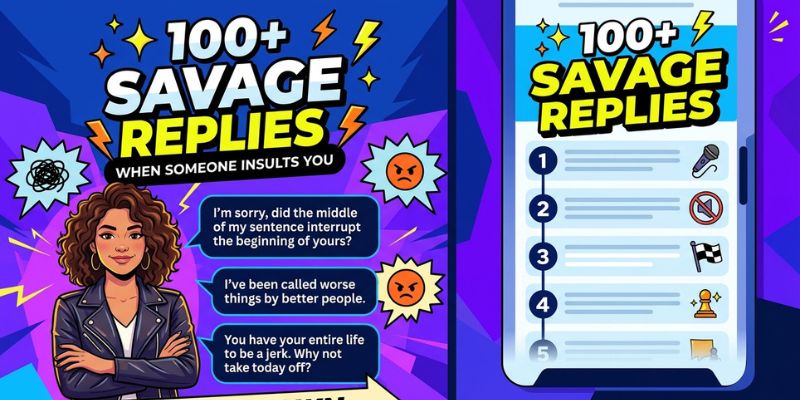
Dealing with insults can be frustrating, but the right response can help you stay confident and in control. Instead of getting angry or upset, a clever or savage comeback can quickly shut down negativity while showing that you won’t be easily rattled.
Whether you’re facing rude comments online, teasing from friends, or disrespectful remarks in everyday life, having a few smart replies ready can make a big difference. This collection of savage replies will help you respond with wit, confidence, and class whenever someone tries to put you down.
Why Is It Important to Know How to Reply to Insults?

Knowing how to respond to insults is a vital social skill that protects your mental well-being and self-respect. When someone throws a demeaning remark your way, an unprepared reaction — whether silence, tears, or explosive anger — can leave you feeling powerless and regretful long after the moment has passed.
Having a repertoire of sharp, composed responses gives you control over the narrative, signals to others that you are not an easy target, and prevents insults from chipping away at your confidence over time. More importantly, it shifts the power dynamic in your favor without requiring you to stoop to pettiness or aggression, allowing you to walk away from any confrontation with your dignity fully intact.
Savage Replies to the Insult | 35 Best Phrases to Use
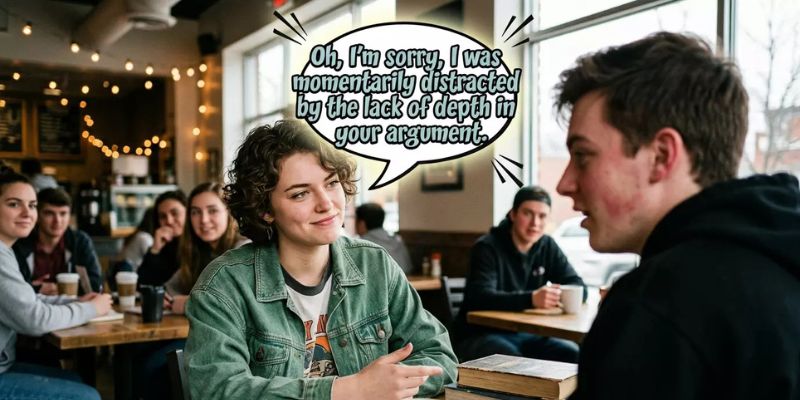
Sometimes the most effective response to a cutting remark is one that is equally sharp, delivered with ice-cold composure and zero apology. Below are 35 of the best savage yet controlled phrases — clever responses and witty replies — you can keep in your arsenal for those moments when someone oversteps their boundaries and deserves a response that makes them think twice before they open their mouth again.
“I’d explain it to you, but I left my crayons at home.”
“Interesting opinion from someone I didn’t ask.”
“I’ve been called worse by better people.”
“Keep talking — I need the entertainment.”
“Oh, I’m sorry. Did my existence offend you?”
“I don’t have the time or the crayons to explain why you’re wrong.”
“Thank you for your unsolicited feedback. I’ll file it accordingly.” (trash bin)
“That almost hurt. Almost.”
“You’re proof that even evolution makes mistakes.”
“I’d agree with you, but then we’d both be wrong.”
“My silence isn’t weakness — it’s me deciding you’re not worth the energy.”
“Oh, were you talking? I tend to zone out when things get boring.”
“It must be exhausting being you.”
“I didn’t realize your opinion came with a request.”
“I’ve heard better comebacks from a fortune cookie.”
“Thanks for the reminder that some people have too much time on their hands.”
“The trash called. It wants its opinion back.”
“I’m not ignoring you — I’m just prioritizing silence over stupidity.”
“You clearly put a lot of thought into that. Maybe redirect that energy.”
“If I wanted your opinion, I would have asked someone worth listening to.”
“Look who decided to open their mouth and confirm every suspicion.”
“Bold words from someone standing in my shadow.”
“Your words say a lot — mostly about you.”
“I’m unbothered and I need you to know that.”
“Please continue. I always yawn when I’m fascinated.”
“You must have been practicing that in the mirror for days.”
“Oh, a personal attack? How original.”
“Bless your heart — you really tried.”
“I outgrew caring about opinions like yours.”
“You should come with a warning label.”
“I’m not here to compete with you — I’m simply out of your league.”
“Your negativity says more about your life than mine.”
“I would clap back, but honestly? You’re not worth the applause.”
“I see you woke up and chose chaos again.”
“The best part about your insult? It changes absolutely nothing for me.”
Tips to Consider Before Answering Any Insult

Before you fire back at someone who has insulted you, taking even a few seconds to think strategically can be the difference between a response you are proud of and one you spend days regretting. The way you handle an insult reveals your character and emotional intelligence, so approaching the moment with intention rather than impulse — rather than reacting with verbal disrespect — gives you a significant advantage in any social situation.
Understand the Intent Behind the Insult

Not every insult carries the same weight or motivation, and understanding why someone said what they did will help you craft the most appropriate response. A remark made out of jealousy calls for a different reply than one born from genuine hostility or ignorance — recognizing the difference allows you to respond with precision rather than wasting emotional energy on someone who simply craves a reaction.
Consider the Setting
The environment you are in when an insult is thrown at you plays a massive role in determining how you should respond, because what works in a casual setting among friends can backfire terribly in a professional or public environment. Savage replies work at parties, but in boardrooms or family gatherings, they can damage your reputation or escalate situations unnecessarily.
Evaluate the Relationship
Your connection to the person insulting you — whether they are a close friend, a colleague, a stranger, or a rival — should heavily influence the tone and content of your reply. A trusted friend may simply need to be told that their comment crossed a line, while someone who repeatedly disrespects you may require a firmer, more direct response that establishes a clear boundary once and for all.
Stay Calm and Avoid Overreacting

Reacting from a place of unchecked emotion almost always makes the situation worse, giving the person who insulted you exactly the dramatic reaction they were hoping to provoke. Taking a breath, steadying your tone, and responding from a place of composure sends a far more powerful message than a loud, emotional outburst ever could — because calmness in the face of disrespect signals unshakeable self-confidence and assertiveness.
Think About Your Goal
Before you respond, ask yourself what you actually want to achieve — do you want to shut the conversation down, assert your boundaries, humiliate the person, or simply move on with your day intact? Clarity on your goal will guide your word choice and delivery, ensuring your response serves your best interests rather than just satisfying a momentary urge to strike back without strategy.
Be Aware of Your Tone
Even the most perfectly worded response can be completely undermined by a tone that sounds desperate, whiny, or out of control, because how you say something often matters more than what you actually say. A confident, even-toned delivery makes your reply land with authority, while a shaky or aggressive tone can make even a clever comeback or sharp one-liner seem like a sign of emotional weakness.
Decide If It’s Even Worth Responding
One of the most powerful moves you can make when insulted is to consciously choose silence, because not every comment deserves the gift of your attention or energy. If the person is clearly seeking a reaction, replying gives them exactly what they want — and sometimes the most devastating thing you can do is simply look at them, let the silence hang in the air, and walk away as though their words were utterly beneath your notice.No matter how sharp your comeback is or how justified your anger may be, the moment you sacrifice your dignity in a response is the moment you hand the other person a quiet victory.
Always aim to walk away from any confrontation feeling good about how you handled yourself, because a response that maintains your grace and self-respect will always age better than one delivered purely out of spite or wounded pride.
When to Walk Away
As satisfying as it can feel to deliver the perfect comeback, there are moments when the wisest, most powerful thing you can do is simply refuse to engage and remove yourself from the situation entirely.
When someone is clearly intoxicated, emotionally unhinged, in a position of authority over you, or determined to escalate no matter what you say, continuing the exchange serves no purpose other than to drain your energy and give them a bigger stage. Walking away is not a sign of defeat — it is a deliberate act of self-preservation and conflict resolution that communicates, more loudly than any words could, that you refuse to let toxic behavior occupy space in your day or your mind.
Funny Comebacks to Shut Down Insults Without Being Rude
Humor is one of the most disarming and socially intelligent tools you can use when responding to an insult, because a well-timed witty remark can defuse tension, make the room laugh, and leave the insulter looking foolish without you ever having to raise your voice or lower your standards.
Funny comebacks for insults like “I’d take that personally, but I don’t take things from strangers,” “You bring so much joy — mostly when you leave,” or “I’m not arguing with you, I’m explaining why you’re wrong” hit hard while keeping the atmosphere light enough that you maintain the social high ground and come across as confident, self-assured, and completely unbothered.
Clever One-Liners for Handling Insults with Confidence
A single, well-crafted one-liner delivered with steady eye contact and an unbothered expression can say more about your confidence than a lengthy, defensive monologue ever could, because brevity signals that you are too secure to need an elaborate explanation. Powerful responses to disrespect like “I’d explain myself, but you’re not on my level,” “That says everything about you and nothing about me,” or “I’ve been insulted by professionals — you’ll need to try harder” are short, razor-sharp, and effective precisely because they communicate total self-assurance without giving the other person anything substantial to grab onto or argue against.
Common Mistakes to Avoid When Responding to Insults
Many people unknowingly sabotage their own responses by making avoidable mistakes that shift sympathy away from them and toward the person who started the conflict in the first place. Losing your temper and raising your voice, getting overly personal or bringing up unrelated grievances, visibly showing that the insult wounded you, apologizing unnecessarily, or over-explaining yourself in a way that sounds defensive are all reactions that undermine your position and make you appear rattled.
The goal is always to respond in a way that is measured, confident, and proportionate — because the person who stays coolest in a confrontation, handles verbal disrespect with grace, and maintains their composure under pressure almost always comes out looking like the one with more class, more control, and ultimately, more power.
Frequently Asked Questions
What is the best savage reply to an insult?
A good savage reply is short, confident, and clever. It should stop the conversation without lowering yourself to their level.
How do I respond to someone who insults me?
Stay calm and avoid reacting emotionally. A composed response often has a stronger impact than an angry one.
Should I always reply to insults?
Not always. Some insults are better ignored, especially when the person is only seeking attention or a reaction.
How can I shut someone down without being rude?
Use humor, confidence, or a calm statement. This allows you to defend yourself while maintaining your dignity.
What makes a comeback effective?
The best comebacks are quick, relevant, and delivered confidently. Timing and tone matter as much as the words themselves.
Conclusion
Being cheated on is one of the most painful experiences a person can face in a relationship. It can leave emotional scars, shake your confidence, and make it difficult to trust again. Painful love messages provide a way to express those feelings honestly, helping you release emotions that are often difficult to communicate.
While these messages can help you share your heartbreak, they can also remind you of your strength. Betrayal may have changed your story, but it does not define your future. With time, healing, self-respect, and personal growth, you can move forward and create a life filled with peace, confidence, and genuine love.

- 250+Heartfelt 6-Month Anniversary Wishes to Melt Hearts 2026 - August 3, 2026
- Best 2-Month Anniversary Wishes, Romantic Messages, and Heartfelt Quotes for 2026 - August 1, 2026
- 250+ Heartfelt 5-Month Anniversary Wishes to Melt Hearts 2025 - July 31, 2026